

A builder and a custom website can both support a successful business. The better choice depends on what the site needs to do, who will maintain it, and what level of design and integration control you need. The platform name alone does not determine search performance or lead quality.
I build custom websites, so I have a point of view. But replacing a useful site simply because it uses a builder is not a sensible recommendation. Start by identifying the problem you actually need to solve.
When a website builder can be a good fit
A builder may suit you if you want to manage the site yourself, its features meet your needs, and you have time to work through content, layout, mobile behavior, and maintenance. Review the current platform documentation for the editing, booking, commerce, or publishing features you need.
The recurring platform charge is only part of the cost. Your time, photography, writing, paid extensions, and any outside help also belong in the comparison. A good builder site still needs thoughtful content and a working contact path.
When a custom approach is useful
A custom project is worth considering when the business needs a particular visitor journey, a more individual design, or integrations that do not fit the current setup well. You may also prefer to work directly with someone who handles the design and ongoing website work.
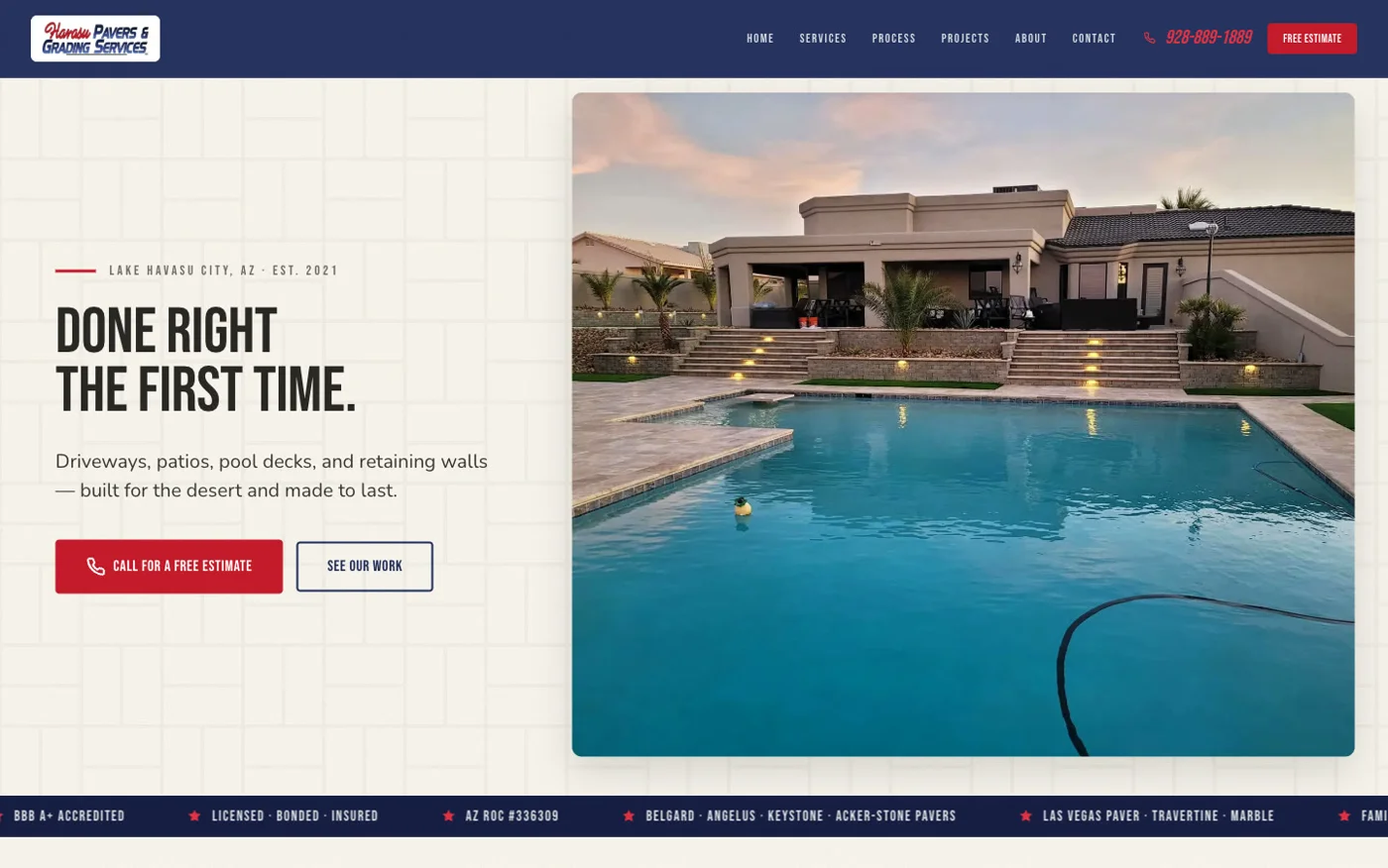
For example, a trades website needs to explain services and qualify an inquiry. A single-property microsite may need a focused photo story, optional motion, and a showing request. Those are different projects, even if both use a similar number of pages.
Compare the job, not the label
- Content: who writes, supplies photographs, and approves factual claims?
- Editing: which changes can you make, and which need support?
- Integrations: how do forms, chat, bookings, and your CRM connect?
- Quality: how are phone layouts, accessibility, loading, and inquiry delivery checked?
- Maintenance: what happens after launch, and what costs extra?
- Portability: what can be transferred or exported, in which format, and under what agreement?
Do not assume that “custom” means you receive every source file or that “builder” means you cannot rank. Ownership, licensing, hosting, and handoff terms need to be read in the actual agreement. Check the platform’s current export documentation before planning a move.
Compare the complete price and scope
Havasu Web Studio’s starting offer is $179 per month with the build fee included for one homepage and one specialty page, plus AI chat and Lead Engine integration. It is a focused business website, not an unlimited build or an in-depth SEO program.
Larger websites, advanced search work, additional integrations, and property microsites have their own scope. The plan page explains current options and terms, including what should be confirmed before a project starts.
Keep what is already working
If your existing site explains the business well and the contact path works, targeted improvements may be enough. If a rebuild is justified, plan URL continuity, content, redirects, analytics, and delivery before replacing the old site. A new look should not erase the useful history.
Send your current site and priorities. I can explain where a custom project would help and where it would simply add work you do not need.